
Overcome Finance Complexity: Gamified Apps for Everyday Money Decisions
Money sits in our pockets and our accounts, but it lives in our minds as a source of constant background static. That low-grade worry when you check your balance. The quick scroll past a retirement article because it feels too dense. Standard money software often just gives you more numbers to stare at, which doesn’t quiet the noise.
A new category of apps is trying something different. They use the same mechanics that make mobile puzzles so engaging: the satisfying completion of a small task, the visual proof of progress. They wrap financial tasks in these interactive layers.
The effect is a change in posture. You move from watching your financial life happen to interacting with it directly. These tools convert moments of confusion into clear, actionable steps you can take right now.
The Playful Path to Financial Confidence
Traditional finance tools often focus on restriction, highlighting what you can’t spend. Gamified apps flip this dynamic entirely. They build positive momentum by celebrating what you learn and the progress you make. The focus moves from deprivation to achievement.
Think of it as building a habit through small, consistent victories. Logging an expense becomes an act of creation in a virtual city. Completing a lesson feels like leveling up a character. These apps layer a narrative of growth over the raw numbers of your financial life. This transforms a solitary task into an engaging activity.
The repetition needed to build financial skill stops feeling like a chore and starts to resemble the satisfying rhythm of a game. You aren’t just being taught. You are practicing and building confidence through interactive experience.
Finelo: Your Finance Simulator
Finelo acts as a personal finance coach and a risk-free trading sandbox all in one. It’s built for anyone who’s ever felt lost when hearing terms like ETFs or market orders. The platform cuts through the noise with over 150 hours of content divided into interactive, bite-sized courses on investing, crypto, and personal finance.

What truly sets Finelo apart is its hands-on investing simulator. You get to practice trading with real market data, interactive charts, and over 120 assets, but without risking a single cent of your actual money.

It’s the perfect training ground to build confidence. Paired with a personalized learning plan and an AI mentor available to answer questions 24/7, Finelo turns the solitary act of learning into a structured and supported journey. It’s an award-nominated platform focused on one thing: helping you build financial confidence, one lesson at a time.
Zogo: Your Financial Literacy Side Hustle
Zogo believes your effort to learn should come with a paycheck. The app frames financial education as a list of quick chores. You complete a brief module on a topic like credit scores, answer a few questions, and move on.
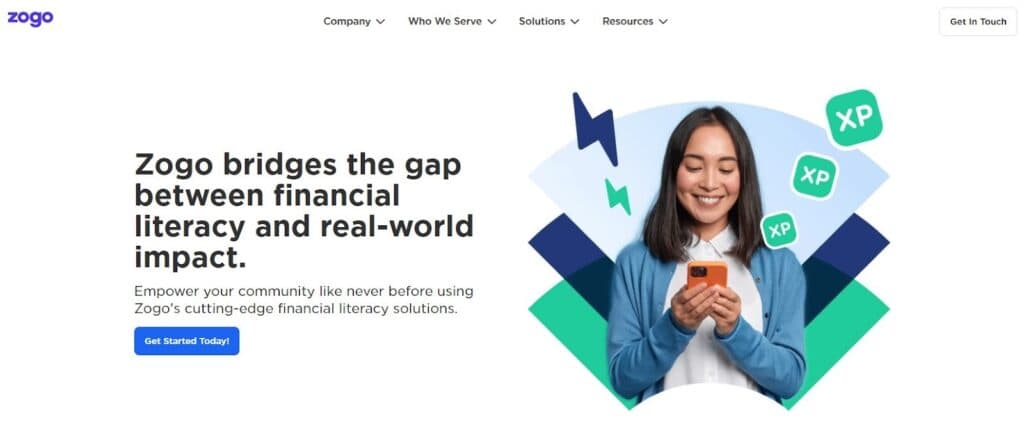
The “Gameplay”: Your main focus becomes collecting Pineapple Points. These points translate directly into gift cards for places like Target or Starbucks. This system turns the abstract concept of learning into a concrete transaction with an immediate, useful result.
Key Features: The platform centers on a large collection of these short financial modules. Its partnerships with companies are what power the reward system, letting users trade knowledge for real-world value.
Fortune City: A Budget Built from Bricks and Mortar
Fortune City reimagines expense tracking as an act of urban planning. Your financial life becomes the blueprint for a growing metropolis. Each transaction you record doesn’t just disappear into a log; it physically materializes as a new structure in your personal city, making your spending habits vividly clear.

The “Gameplay”: The core loop is deeply visual. You log a purchase for groceries, and a supermarket appears on your map. You record an internet payment, and a telecom tower is erected. The drive to see what your city will become next provides a surprising incentive to stay consistent with tracking, turning a routine task into a creative project.
Key Features: The app’s standout feature is its city-building simulation which is directly tied to your transaction history. It also includes spending categorization and analysis tools, but presents the data through the evolving landscape of your city rather than just charts and graphs.
Cove: A Visual Journey for Your Savings
Cove transforms the abstract concept of saving money into a tangible and rewarding visual journey. Instead of just watching numbers change in an account, you build your own virtual island paradise as you stash your cash.

Cove makes your savings account visible. It connects your financial decisions to the development of a personalized digital island. Stashing money becomes the reason your virtual landscape gains new features and grows more detailed.
The “Gameplay”: You fund a savings goal and then watch your island react. Your deposits directly shape the environment, adding trees, buildings, and scenery. This creates a calm, visual incentive to keep contributing, as you see a direct correlation between your money and your creation.
Key Features: The core of Cove is this visual savings tracker, represented by an evolving island. The app also includes tools for setting specific targets and tracks any interest you earn on your savings.
Honeydue: The Finance App for Two
Honeydue focuses on the financial dance between partners. It takes the monthly “money talk” and spreads it out into small, daily interactions. The app builds a shared space where both people can see their combined financial picture without losing individual privacy.

The “Gameplay”: Interaction is the main event. You can attach a note or an emoji to any transaction, asking “What was this?” or celebrating “Great date night!”. Splitting a bill takes two taps. Setting a monthly limit for “takeout” means you both get a friendly alert when you’re near the cap, making budgeting a shared responsibility.
Key Features: Honeydue syncs with thousands of banks to pull all accounts into one dashboard. You control exactly what your partner sees, which keeps surprises secret. It also sends reminders for upcoming bills to help avoid missed payments.
Why Your Brain Loves a Good Financial Game
We instinctively check for that streak notification or to see our city expand. These apps tap into that basic human pull toward completion and collection. Money management is usually a long, slow burn with rewards far in the future. These tools make progress feel present and visible.
A badge or a new building provides instant, silent confirmation you did something right. It shortens the wait between action and outcome. This makes a large, complex task feel like a series of manageable steps. The need for perfect decisions fades. A simulated trade that loses value or a slightly busted budget becomes neutral information. It’s just a result, not a verdict on your competence.
You get a consequence-free space to try things and observe what happens. This repeated, low-pressure interaction builds a gut-level comfort with financial concepts that textbooks cannot provide.
Wrapping Up
Money management stops feeling like a burden the moment it starts to feel like a fair game. The real value in these apps is in how they reshape your relationship with money on your own terms.
Your next step is simply a matter of preference. Do you learn best by doing, needing a safe space to practice like Finelo provides? Does a direct incentive, like Zogo’s reward system, keep you committed? Or does a visual story, like the city you build with your spending in Fortune City, make the process stick for you?
Becoming an app expert is not the point. The point is finding the tool that leaves you feeling capable with your money. That movement from confusion to basic confidence is the entire prize. The best choice for you is whichever app fits so smoothly into your routine that improving your finances stops being a special project and starts feeling like something you just do.